


 Biodegradable
 Energy Efficient
 Made in Australia
 Made in Austria
 Made in Belgium
 Made in Brazil
 Made in Bulgaria
 Made in Canada
 Made in China
 Made in Czech Republic
 Made in Dubai
 Made in Finland
 Made in France
 Made in Germany
 Made in Greece
 Made in Hungary
 Made in India
 Made in Italy
 Made in Japan
 Made in Malaysia
 Made in Netherlands
 Made in Pakistan
 Made in Serbia
 Made in Slovakia
 Made in Slovenia
 Made in South Korea
 Made in Spain
 Made in Sweden
 Made in Switzerland
 Made in United Kingdom
 Made in USA
 Organic
 Recyclable
 Recycled
 Renewable Resource
 Reusable
 Water Saver


SunTech WdS (245 - 250 watts)
ECO-foryou.com is the international "Wholesale-Broker" for green companies, green products and environmental services...

Search green products
Search green companies
SunTech WdS (245 - 250 watts)
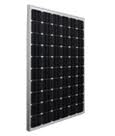
The High-Performance Module in Standard Format
The monocrystalline cells and universal module format of this 60-cell monocrystalline solar module with an efficiency of 15.2% makes it particularly suitable for installation on roofs. Installation costs can be reduced and yield increased. The perfect solution where high performance is required.
Technical information: >>> DOWNLOAD (pdf.) |
Solar modules
Solar modules transform light in to electrical energy. They are made up of individual solar cells that release energy when exposed to light. This photovoltaic process is based on a special material that is present in almost all solar cells: silicon a semiconductor with natural electrical properties.
- Monocrystalline solar cells are black or dark blue in color. They are made up of just one crystal and have the highest efficiency factor of all silicon cells. They are preferred in situations where available surface area is limited. Their lifespan is at least 20 years.
- Polycrystalline or multi-crystalline solar cells have a blue surface. Their crystal structure is only partially ordered giving them less voltage which means a somewhat lower efficiency factor. Polycrystalline cells are easier to manufacture, cheaper to produce and are the most used technology in the photovoltaic sector.
- Thin film modules are dark red or dark brown in color. They are made up of a thin, amorphous silicon layer. Thanks to their low material consumption and low price, they are prized in projects where large surfaces are to be covered. They have a low efficiency factor in bright sunlight, but they offer many advantages in low light and diffuse light as well as in higher temperature climates.
Generating cleaner energy through recycling
Modules are constructed with materials that could be reused for new solar modules or new products. Through recycling, the valuable materials, like glass, aluminum and silicon materials can be preserved, leading to less waste and less energy used in module production. Both of these contribute to a positive environmental balance. This decreases not only the carbon dioxide emissions, but the overall costs as well. Thus, the modules generate not only renewable energy, but are also sustainable resources after they have reached the end of their life cycle. IBC SOLAR has become a member of the European “PV CYCLE Association”, to support the recycling of photovoltaic modules. PV CYCLE is currently setting up collection points all over Europe, where installers and citizens can deliver their worn-out modules.
Additional Information
|
certificates: 
|
Total Views: 2847
More products from this category

Wind turbines-300W
A renewable form of energy and a kinetic energy of air masses in the atmosphere .....
Wind turbines-500W
A renewable form of energy and a kinetic energy of air masses in the atmosphere .....
Wind turbines-1000W
A renewable form of energy and a kinetic energy of air masses in the atmosphere .....


